
As vehicles become more autonomous and electrified, the ability to measure position, speed, and current without physical contact is paramount. Central to this evolution is the Hall Effect sensor, a solid-state semiconductor device that has become the gold standard for precision in harsh vehicular environments.
By leveraging the principles of electromagnetism, these sensors allow for sub-millimeter accuracy in everything from throttle control to anti-lock braking systems (ABS), ensuring that the vehicle’s central processing unit (ECU) receives real-time, high-fidelity data.
What is the Science Behind the Hall Effect?
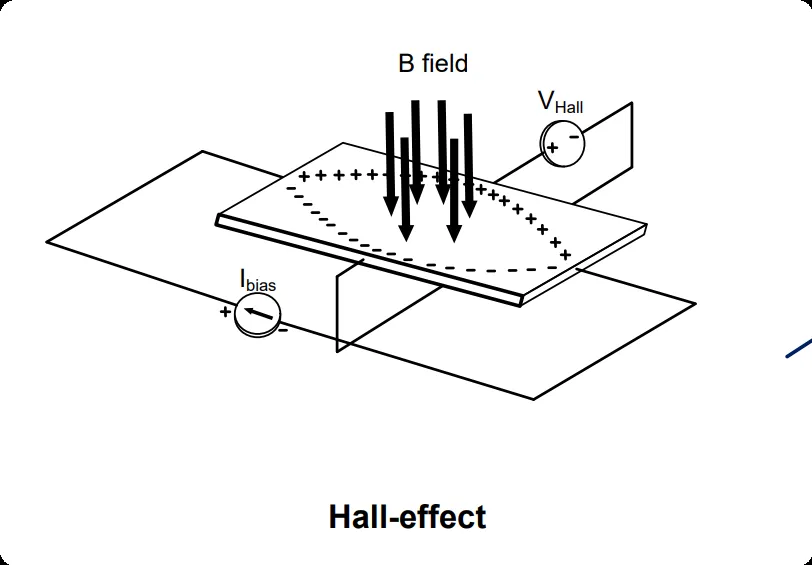
Named after physicist Edwin Hall, the “Hall Effect” occurs when a magnetic field is applied perpendicularly to a conductor carrying an electric current. This creates a measurable voltage difference (the Hall voltage) across the conductor.
In an automotive Hall Effect sensor, this voltage is processed by integrated circuitry to determine the proximity or strength of a nearby magnet. Because the sensor is solid-state—meaning it has no moving parts—it does not suffer from the mechanical wear, friction, or debris accumulation that plagues traditional potentiometers.
How Does a Hall Effect Sensor Enhance Engine Performance?
Precision in an internal combustion engine (ICE) or a hybrid powertrain depends entirely on timing. The ECU must know the exact position of the crankshaft and camshaft to trigger fuel injection and ignition at the microsecond they are required.
Crankshaft and Camshaft Position Sensing
Traditional mechanical sensors were prone to “signal drift” as components aged. In contrast, a Hall Effect sensor detects the teeth of a rotating gear on the shaft with absolute consistency.
- Accuracy: It provides a digital “on/off” signal that remains sharp regardless of engine RPM.
- Cold Start Reliability: Unlike inductive sensors, which require a high rotation speed to generate a signal, Hall sensors can detect position even at zero speed, which is critical for modern stop-start engine technology.
What Role Does Precision Play in Safety Systems?
Safety is perhaps the most significant beneficiary of Hall-effect technology. In the realm of Braking and Stability Control, the margin for error is nonexistent.
Anti-lock Braking Systems (ABS)
Each wheel on a modern vehicle is equipped with a sensor that monitors rotational speed. If a Hall Effect sensor detects that one wheel is rotating significantly slower than the others (indicating a skid), the ABS intervention occurs instantly. The precision of these sensors allows the system to pump the brakes dozens of times per second, a feat impossible with less sensitive hardware.
Throttle and Pedal Position
Modern “Electronic Throttle Control” (ETC) replaces the old-fashioned cable with a sensor. When you press the accelerator, a Hall Effect sensor measures the angle of the pedal. This data is cross-referenced with other electronic components to ensure the engine responds smoothly and predictably, eliminating the “lag” associated with older mechanical systems.
Why Is Durability Synonymous with Precision?
In the automotive world, a sensor is only precise if it can maintain that precision under extreme conditions. Engines vibrate, temperatures swing from -40°C to over 150°C, and road salt or oil can coat every surface.
Because the Hall Effect sensor is encased in high-grade polymers and uses non-contact sensing, it is immune to these environmental stressors. This longevity ensures that a car with 100,000 miles on the odometer performs with the same precision as it did on day one.
“We often see that system reliability is a direct reflection of component choice. In our experience at DiGi Electronics, providing high-spec Hall sensors is about more than just data; it’s about ensuring the safety-critical systems of a vehicle never face a ‘blind spot’ due to environmental interference,” notes a senior technical consultant at the firm.
Supporting the Ecosystem: The Role of Secondary Components
While the sensor provides the data, the integrity of the signal depends on the stability of the power supply and the protection of the circuit. In high-power electric vehicles (EVs), sensors must be shielded from massive electromagnetic interference (EMI).
This is where the broader bill of materials (BOM) becomes vital. High-quality SMD diodes are used to prevent voltage spikes from damaging the sensor’s logic, while High Rupturing Capacity (HRC) fuses protect the primary power lines that feed the vehicle’s sensor array.
DiGi Electronics has been a key player in this supply chain since 2010. As a specialized integrated circuit electronic components supplier, DiGi serves over 163,000 customers globally, ensuring that automotive manufacturers have access to the authentic semiconductors required for high-precision builds. Their global reach across 236 countries allows them to maintain a steady flow of specialized sensors and protection components even during market volatility.
Conclusion
The Hall Effect sensor is the unsung hero of automotive engineering. It is the bridge between the physical world of rotating gears and the digital world of the ECU. As we move toward fully autonomous driving, the need for these “digital eyes” will only grow.
By removing mechanical friction and providing a high-speed, reliable data stream, Hall-effect technology ensures that modern vehicles are safer, more efficient, and more precise than ever before. For engineers and manufacturers, the message is clear: precision starts at the component level, and there is no substitute for the reliability of a well-engineered solid-state sensor.