
The modern car is as much a computer as it is a mechanical machine. Where vehicles of previous decades relied on relatively simple electrical systems — starter motors, basic sensors, analogue gauges — today’s cars contain dozens of interconnected electronic control units (ECUs) managing everything from fuel injection and emissions to braking, stability, infotainment, and driver assistance. The electronics in a contemporary vehicle can involve over 100 million lines of software code — more than many aircraft.
Understanding how these systems work, what can go wrong, and what drivers can do about it is increasingly relevant knowledge — not just for mechanics, but for anyone who owns or operates a vehicle.
The Electronic Control Unit Network
At the heart of modern vehicle electronics is a network of ECUs — specialised microcomputers, each responsible for a specific system. The engine control unit manages combustion: fuel injection timing, air-to-fuel ratios, ignition, and emissions controls. The transmission control module governs gear changes. The ABS module monitors wheel speeds and modulates brake pressure to prevent lockup. The body control module handles lighting, windows, locks, and accessories.
These modules communicate with each other over an in-vehicle network — most commonly using the Controller Area Network (CAN) bus protocol. When one module sends a signal, others receive it — enabling coordinated responses that would be impossible with standalone systems.
Sensors: The Vehicle’s Nervous System
Electronic systems depend entirely on the quality of the data they receive. Modern vehicles incorporate hundreds of sensors monitoring everything from exhaust oxygen content and engine knock to steering angle, tyre pressure, rain on the windscreen, and the presence of objects in adjacent lanes. When a sensor fails or delivers inaccurate readings, the ECU managing that system has to make decisions with bad information — often triggering warning lights, limp mode, or unexpected behaviour.
One of the most practically important sensor groups for everyday drivers is the emissions-related sensor cluster. Oxygen sensors, mass airflow sensors, and crankshaft position sensors all feed directly into fuel management. A failing oxygen sensor can cause rich running conditions — excessive fuel consumption, reduced power, and potentially costly catalytic converter damage if left unaddressed.
Diagnostics: Reading What the Vehicle Knows
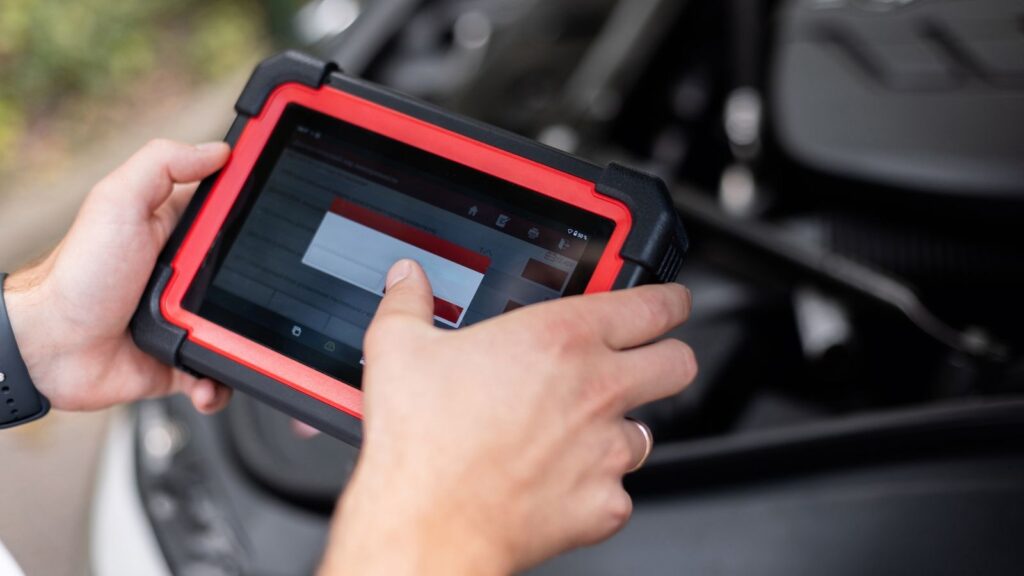
In the era of smart vehicles, understanding the intricate web of car electronics isn’t just for auto experts anymore. The OBD-II port, standardised across all vehicles sold in the US since 1996, gives anyone with a scan tool access to the fault codes, live data streams, and readiness monitors that technicians use for diagnosis. Budget IID offers court-approved ignition interlock devices that connect to a vehicle’s systems with clarity and precision — making compliance monitoring transparent, accurate, and straightforward for drivers fulfilling court-mandated requirements across multiple states.
Entry-level Bluetooth OBD-II readers paired with a smartphone app cost very little and can read and clear fault codes, display real-time engine data, and run emissions readiness checks. More advanced professional-grade scanners provide bidirectional control and manufacturer-specific diagnostics beyond the generic OBD-II standard.
Advanced Driver Assistance Systems
The most visible evolution in vehicle electronics in recent years has been the proliferation of advanced driver assistance systems (ADAS). Adaptive cruise control, lane-keeping assist, automatic emergency braking, blind-spot monitoring, and parking assistance are now standard across most vehicle segments. These systems depend on a fusion of sensor inputs — cameras, radar, ultrasonic sensors — processed in real time by dedicated ADAS control units.
Calibration is an often-overlooked aspect of ADAS maintenance. After any repair that affects sensor positioning — windscreen replacement, front-end collision repair, wheel alignment — camera and radar systems must be recalibrated to ensure they’re reading the environment accurately. Driving with incorrectly calibrated ADAS can create a false sense of security or trigger inappropriate interventions.
Cybersecurity and the Connected Vehicle
As vehicles have become connected — capable of receiving software updates, communicating with infrastructure, and transmitting telematics data — they’ve also become potential targets for cyber attack. Researchers have demonstrated the ability to remotely compromise vehicle systems through vulnerabilities in infotainment units and telematics modules. Manufacturers are investing heavily in automotive cybersecurity, applying network segmentation, intrusion detection, and secure over-the-air update mechanisms to protect vehicle architecture.
Maintaining Vehicle Electronics
Electronic system maintenance differs from mechanical maintenance in important ways. There are fewer wear items that require scheduled replacement, but software and calibration need attention, and electrical connections degrade over time through corrosion, vibration, and heat cycling. Keeping the battery in good condition is particularly important — many modern electronic system faults trace back to marginal battery voltage causing unpredictable ECU behaviour.
Understanding your vehicle’s electronics won’t make you a technician, but it will make you a better-informed driver — one who can ask the right questions, recognise when something is wrong before it becomes serious, and make decisions about maintenance and repair from a position of knowledge rather than guesswork.