
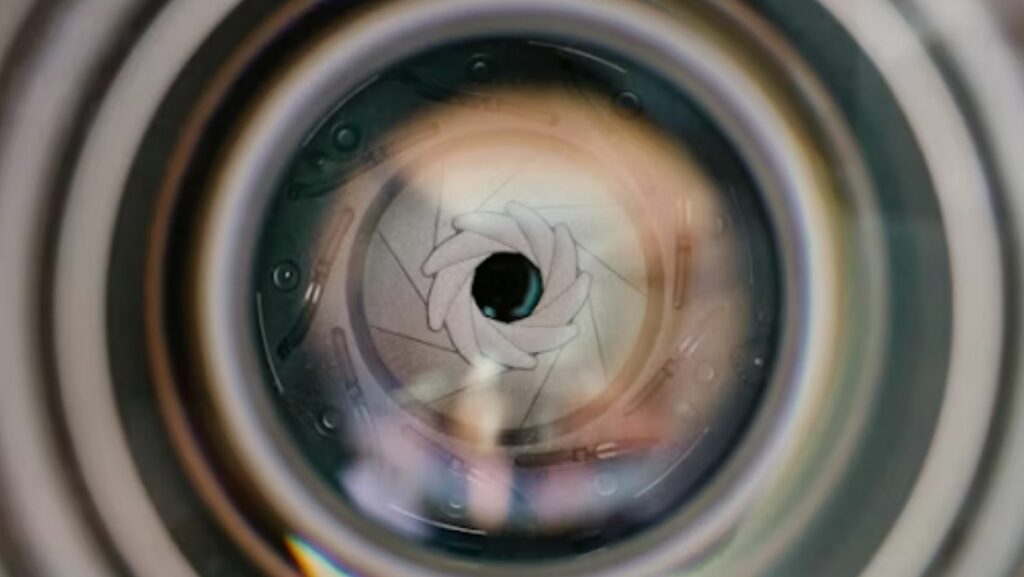
Industrial imaging cameras are the workhorse of automated manufacturing.
In today’s hyper-competitive factory environment, every enterprise is making a significant investment in automation. The systems and robots that power production lines need to “see” what they’re working on. This is where industrial cameras come into play.
The bottom line…
You can’t have automation without vision. Machines can’t inspect products or execute quality control checks without cameras. That’s what industrial imaging is for.
The good news? Cameras are easier to use than ever before. And they’re changing the way factories operate all over the world.
In This Article We’re Going To Cover:
- Why Industrial Cameras Matter for Automation
- How Vision Systems Improve Quality Control
- The Key Applications Driving Adoption
- Choosing the Right Camera for Your Setup
Why Industrial Cameras Matter for Automation
Industrial cameras serve as the eyes of a factory.
These specialised devices are designed to capture real-time images and video for inspection, quality control, and monitoring purposes. They can operate in harsh industrial environments, providing high-resolution images with precision accuracy.
The market is massive. In fact, over 65% of US industrial units have already adopted machine vision systems as part of their operational infrastructure. And that percentage is growing every year.
The reason for the surge in demand? Businesses want precision. Speed. And consistency that human workers cannot match.
With advanced imaging solutions for industrial use, manufacturers can access technology that is capable of detecting microscopic flaws, guiding robotic arms, and monitoring production in real time. This is the essence of modern smart manufacturing.
Industrial imaging cameras do this by converting optical signals into electrical data. This data is then processed by software in order to make production line decisions in fractions of a second. It can repeat this process thousands of times per hour without breaks or fatigue.
That’s pretty powerful.
How Vision Systems Improve Quality Control
Quality control is the stage of manufacturing where industrial cameras really come into their own.
Think about the challenges of manual inspection: humans get tired. They make mistakes. They’re inconsistent. An employee conducting product checks at the beginning of a shift is performing at a different level than at the end.
Industrial cameras aren’t like this.
Research from the Ponemon Institute shows that automated systems achieve 99.8% consistency in production runs. Meanwhile, manual operations see just a 94.6% consistency. That gap may seem small, but in high-volume manufacturing environments it can equate to thousands of defective products.
The benefits of vision-based quality control processes include:
- Consistent performance – cameras are not fatigued or distracted
- Speed – inspection is instantaneous, rather than taking minutes or hours
- Precision – detection of microscopic defects and other issues
- Documentation – every single inspection is recorded automatically
- Cost savings – the fewer defective products that reach customers
AI-powered cameras take all of the above to another level. These systems learn from previous inspections and continually refine their detection capabilities. Some industrial imaging solutions can identify defects as small as 3 nanometres in size for semiconductor manufacturing.
To put that into context, 3 nanometres is 400 times smaller than a human hair.
The Key Applications Driving Adoption
Industrial imaging cameras aren’t just used in one type of manufacturing environment. You’ll find them everywhere.
Automotive Manufacturing
Vision systems are used to verify the quality of finished products, inspect welds, and guide robot arms in car factories. Virtually every vehicle that leaves the production line has been scanned by cameras dozens of times.
Food and Beverage
Cameras monitor fill levels, verify the accuracy of labels, and check for packaging defects. Industrial imaging can even spot contamination on food that would be invisible to human workers.
Pharmaceuticals
The pharmaceutical industry has a very strict quality control protocol. Industrial cameras help meet regulatory standards while still keeping up with production speed.
Electronics
Inspecting circuit boards requires incredible accuracy. Vision systems help identify soldering defects, component misalignment, and surface blemishes in real time.
Logistics and Warehousing
Barcode scanning, package sorting, and inventory management are all completed with industrial imaging technology.
The list of industrial applications for cameras goes on and on. Any industry that has a focus on quality and efficiency can use these systems. And as manufacturing operations become more complex, so too does the role of industrial cameras within those operations.
Choosing the Right Camera for Your Setup
Industrial cameras aren’t a one-size-fits-all proposition.
Different applications have different requirements and need specialised systems. A camera that is perfect for inspecting beverage bottles may not be ideal for semiconductor wafer analysis.
Here are the main factors to consider when selecting an industrial imaging solution:
Resolution Requirements
Higher resolution allows for more fine-grained details to be observed. However, this comes at the cost of processing more data. Choose a resolution that is appropriate for the size of defects that need detection.
Frame Rate
Production lines move quickly. The camera needs to be fast enough to capture images that can be used to inspect every passing product. Specialised high-speed cameras may be required for certain applications.
Environmental Conditions
Industrial cameras must function in dusty environments, while also being resistant to vibration, high/low temperatures, and humidity. The housing and overall build quality of the camera will be important factors here.
Integration
Industrial cameras need to be able to connect to existing automation and inspection systems. Common communication interfaces include GigE Vision, USB3 Vision, and Camera Link. Check for compatibility.
Lighting
Remember that the camera is only part of the equation. Proper lighting needs to be in place to ensure consistent image quality. Many inspection systems fail due to poor illumination, rather than camera problems.
The industrial camera market has solutions available for virtually every application. From basic 2D imaging systems, to advanced 3D scanning hardware, there is technology available to help with specific manufacturing challenges.
Staying Ahead of the Competition
The manufacturers that are winning in today’s business environment are the ones that embrace vision technology.
It’s no longer just about detecting defects. Industrial cameras provide data that can be used to drive continuous improvement. Every image captured from the production line can be used to optimise production processes over time.
Companies that hesitate and wait to see what their competitors are doing are the ones that end up behind. Manufacturers are already using these systems to dramatically reduce waste, increase the speed of production, and deliver higher quality products to customers.
The investment in vision pays for itself quickly. Fewer returns. Less rework. Faster throughput. These benefits compound every single month.
The Bottom Line
Industrial imaging cameras have become critical components of modern automation.
They provide the visual data that machines need in order to operate intelligently. Without them, robots are blind. Quality control is conducted by human workers. And manufacturing processes don’t run with the same level of efficiency.
The technology is also advancing rapidly. Artificial intelligence integration is making these systems smarter. Resolution and processing speeds are improving. And costs are coming down as adoption rates increase.
For any manufacturer that is serious about automation, industrial cameras are not optional. They are the place to start.
A few things to keep in mind:
- Vision systems are the eyes of automated manufacturing
- Cameras provide a level of consistency that human inspection simply cannot match
- Industrial applications are used in nearly every industry
- Success in this space is defined by choosing the right camera specifications
- Integration with existing systems requires careful planning
Factories of the future are only going to become even more dependent on visual intelligence. Industrial imaging cameras are connecting the dots between raw materials and finished products with a precision that was impossible even ten years ago.
That is the reality of modern manufacturing. And it’s only going to get more sophisticated from here.