

A decade ago, the idea of running a business entirely through cloud-based software felt ambitious. Today, it is the baseline expectation. From the way invoices are processed to how companies onboard new employees, digital tools have quietly dismantled the old paper-and-spreadsheet model and replaced it with something faster, more connected, and far more scalable.
What makes this transformation particularly interesting is that it has not happened in one department or one industry. It has unfolded simultaneously across every function of a business — finance, operations, HR, marketing, and internal communications — often driven not by top-down mandates but by the practical frustrations of people trying to do their jobs more effectively.
Finance and Invoicing: The First Frontier
For most businesses, the journey into digital operations began with finance. Accounts payable and receivable were traditionally labour-intensive processes: invoices arrived by post, were manually entered into ledgers or basic spreadsheets, and then filed away in physical folders that nobody ever wanted to search through. Errors were common, approval chains were slow, and month-end reconciliation was a ritual dreaded by finance teams everywhere.
Cloud-based accounting and invoicing software changed this entirely. Moving invoicing into the cloud took a completely manual process and transformed it into something efficient, automated and secure.
The same digital transformation has reshaped how businesses approach employee communication and team culture. An employee engagement platform like the solutions explored by Supporting Cast can help organisations deliver consistent internal messaging and build stronger connections across remote and distributed teams through the power of podcasting.
Real-time dashboards now give finance directors instant visibility into cash flow. Automated reminders chase late payments without requiring human intervention. Approval workflows route invoices to the right people without anyone needing to walk across an office. The time saved is significant, but the reduction in errors and the improvement in financial visibility have arguably been even more valuable for growing businesses.
Project Management: From Whiteboards to Workflows
Once finance teams demonstrated what was possible, the logic spread quickly to project management. Sticky notes on whiteboards and colour-coded spreadsheets gave way to purpose-built platforms that could track tasks, deadlines, dependencies, and team workloads from a single interface — accessible from anywhere, on any device.
This shift had a particularly dramatic effect on distributed and remote teams. When your project management tool lives in the cloud, geography stops being a constraint. A developer in one time zone can hand off to a designer in another without anything falling through the cracks. Status updates happen in real time rather than in weekly meetings that could just as easily have been an email.
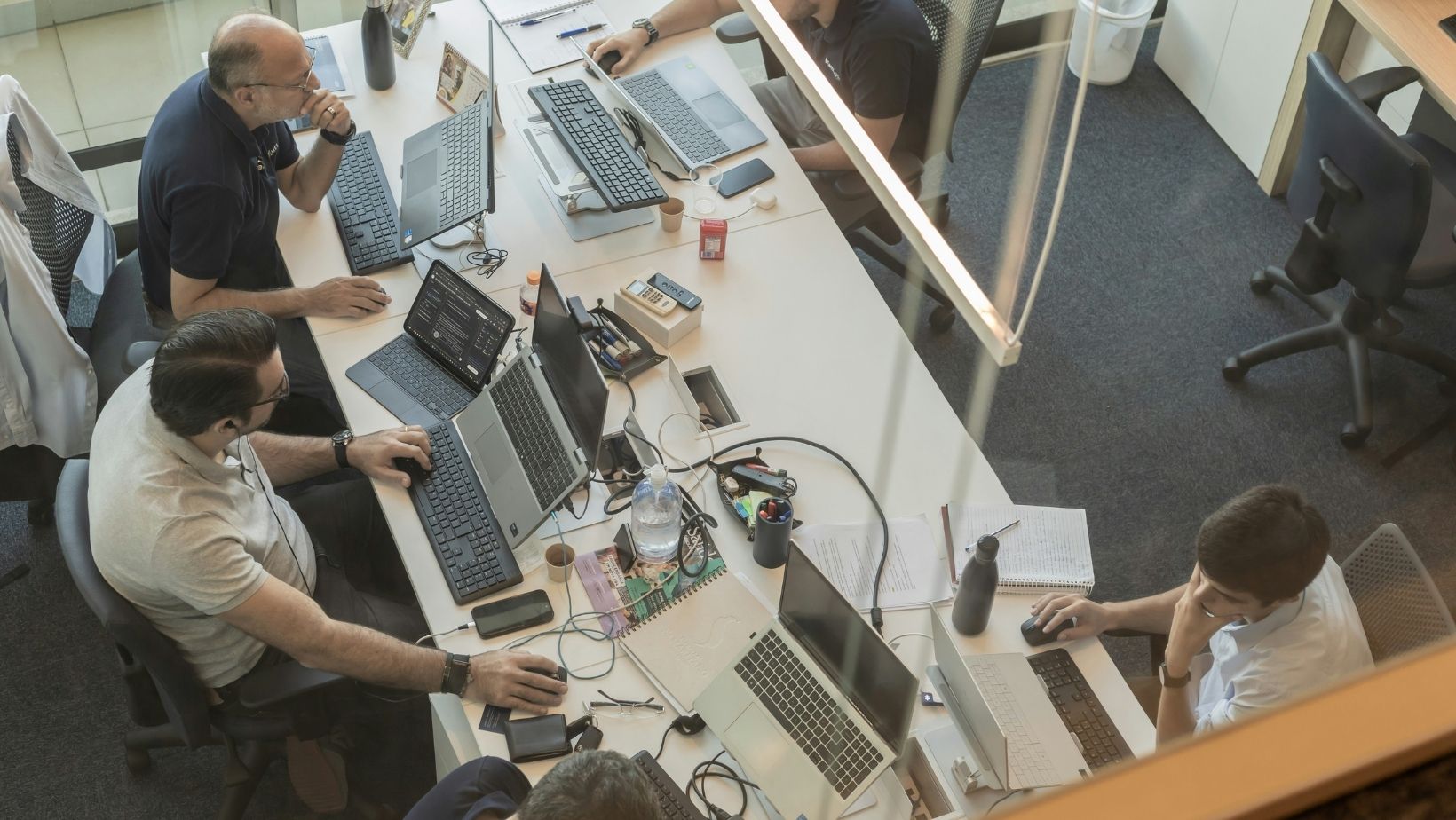
For businesses managing multiple client projects simultaneously, the improvement in visibility and accountability has been transformative. Deadlines are tracked automatically. Resource conflicts surface before they become problems. And the historical record of every project — every decision, every revision, every conversation — is archived and searchable rather than lost in someone’s inbox.
HR and Onboarding: Making the Human Side More Human
Human resources is perhaps the area where the gap between old and new processes was most felt by employees rather than just managers. Manual onboarding paperwork, fragmented policy documents stored on shared drives nobody maintained, and annual performance reviews conducted via forms that nobody enjoyed — these were the hallmarks of HR before the digital shift.
Modern HR platforms centralise everything from job postings and applicant tracking to contract management, benefits administration, and performance management. New joiners can complete onboarding before their first day, arriving with access already set up and policies already reviewed. Managers have structured frameworks for ongoing feedback rather than relying on the annual review cycle that research has consistently shown to be ineffective.
Perhaps more importantly, digital HR tools have made it easier for businesses to maintain consistent culture across geographies. When company values, training resources, and internal communications exist in accessible, searchable platforms rather than getting lost in email threads, the experience of working for a company feels more coherent regardless of where someone is based.
Customer Relationships: Turning Data Into Decisions
The digitalisation of customer relationship management has given businesses of every size access to the kind of data that was previously only available to enterprises with dedicated analytics teams. Cloud-based CRM platforms track every interaction a customer has with a business — from the first marketing email they opened to the support ticket they raised six months into their contract — and surface patterns that help sales and customer success teams act at the right moment.
Churn prediction, pipeline visibility, automated follow-up sequences, and segmented communication workflows are now standard features rather than competitive advantages. The businesses that use them effectively are not necessarily the ones with the largest budgets; they are the ones that have committed to understanding their data and building processes around it.
The Cultural Dimension No One Talks About Enough
Amid all the operational and financial gains from digital transformation, there is a dimension that gets less attention: the cultural one. Technology changes how people experience work, not just how efficiently they complete it. When communication becomes more asynchronous, when teams are distributed across cities and continents, and when the informal interactions that used to happen naturally in shared offices disappear, businesses face a genuine risk of cultural fragmentation.
The companies navigating this most successfully are those that treat internal communication as a deliberate function rather than an afterthought. They invest in tools and formats that keep people connected to the organisation’s direction, values, and story — not through mandatory all-hands meetings or dense internal newsletters, but through engaging, accessible content that people actually want to consume.
Audio formats in particular have emerged as a powerful medium for internal communication, allowing leaders and teams to share updates, context, and culture in a way that feels personal rather than corporate. The shift is part of a broader recognition that the same instincts that make consumer technology engaging — convenience, personality, narrative — apply just as much inside organisations as outside them.
What Comes Next
Digital transformation is not a destination businesses arrive at and then stop. It is an ongoing process of evaluating where friction exists, where human effort is being applied to tasks that software could handle, and where the tools available today could meaningfully improve how work gets done tomorrow.
The businesses that thrive will not necessarily be the ones that adopted technology earliest. They will be the ones that thought most carefully about which problems they were actually solving — and chose tools that served their people as much as their processes.